
Neuralink Brain Data Ownership: Privacy Issues Uncovered
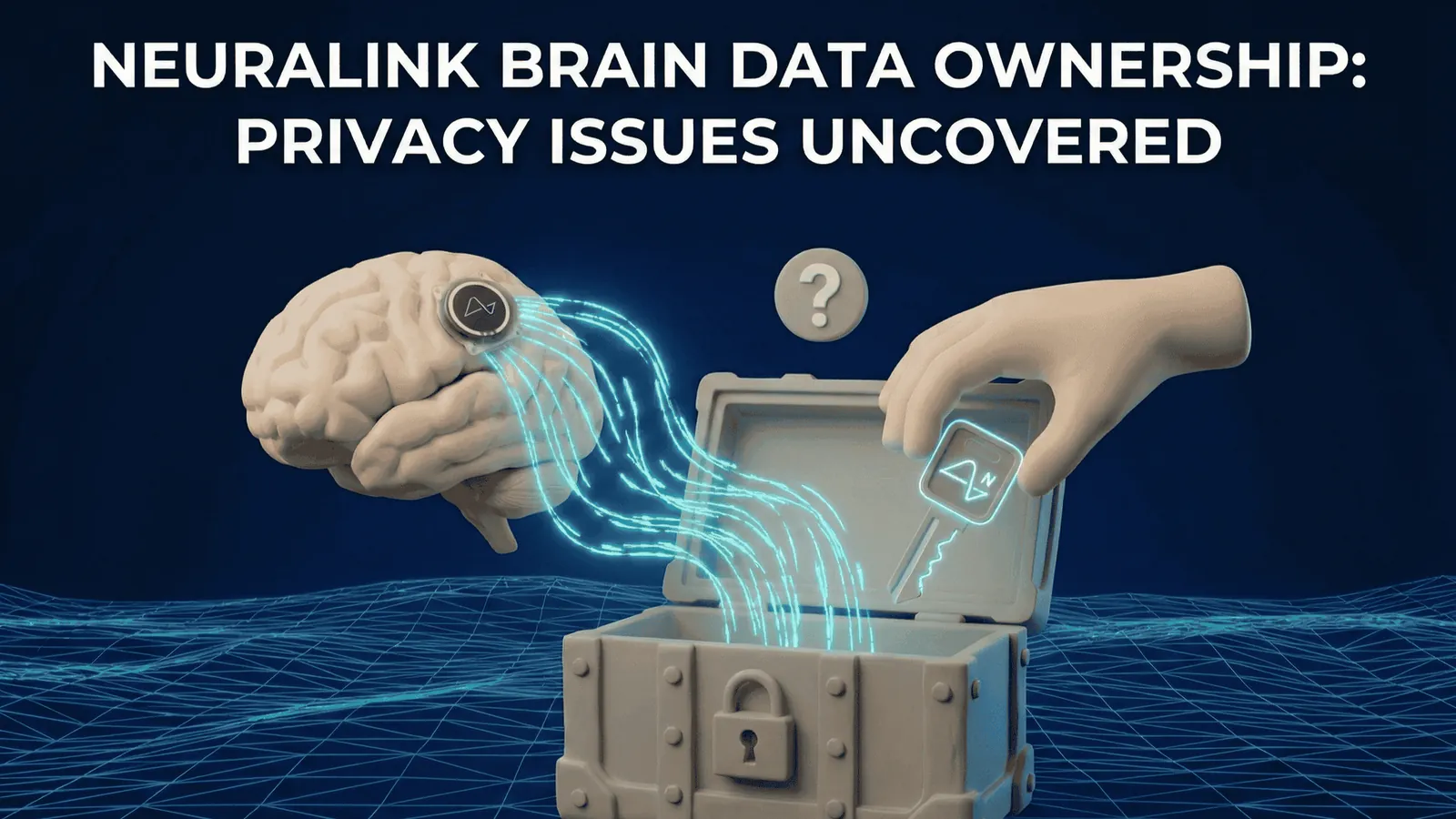
- Neuralink's privacy policy, updated March 12, 2025, says the company does not sell personal information.
- The same policy says data from clinical trials is governed by the trial protocol, each participant's informed consent, and, where applicable, HIPAA authorization forms.
- The MIND Act, introduced in the U.S. Senate on September 24, 2025, would direct the FTC to study how neural data is collected and used.
What Neuralink's privacy policy says
A Neuralink implant records electrical activity from 1,024 electrodes in the brain, and that stream of data is what lets a participant move a cursor or type by thought. The question of who controls it matters to every person in the trials. Neuralink's privacy policy, last updated March 12, 2025, says the company does not sell personal information. For clinical trials, the policy points elsewhere: trial data is governed by the trial protocol, the participant's informed consent, and, where applicable, HIPAA authorization forms.
That means the public policy does not describe what rights a trial participant has over their own neural recordings. Those terms are in each trial's consent documents, which Neuralink has not published.
Privacy questions in human trials
Critics have raised the risk that recordings from the brain could one day be interpreted in ways the participant never agreed to. The implant processes signals on its chip and sends them over Bluetooth to the participant's paired computer or phone, where the decoding software runs. Neuralink has not published how long it keeps recordings, who inside the company can see them, or how they are protected in storage.
Trial participants who use the implant for 3D design or gaming have spoken publicly about what it has given back to them, and those accounts are on Neura Pod's patient table.
U.S. laws on neural data
On September 24, 2025, Senators Schumer, Cantwell, and Markey introduced the MIND Act, which would direct the FTC to study how neural data is collected and used and recommend protections, as Covington's Inside Privacy summarized. The bill would not set rules for companies on its own.
States have moved faster. Colorado was first, adding neural data to the sensitive data covered by its privacy law in 2024, and California, Montana, and Connecticut have since passed laws that protect neural data. These laws aim to prevent misuse without blocking medical research.
Open questions
Neuralink's planned Blindsight implant would stimulate the brain as well as record from it. Implants that both read and stimulate the brain will need stronger privacy protections, and neither Neuralink nor regulators have published rules for that case yet.
This article was first published in October 2025 and corrected in October 2026; the latest patient count is on the patient table.








