
Can Neuralink Expand Brain Storage via Cloud? Tech Possibilities
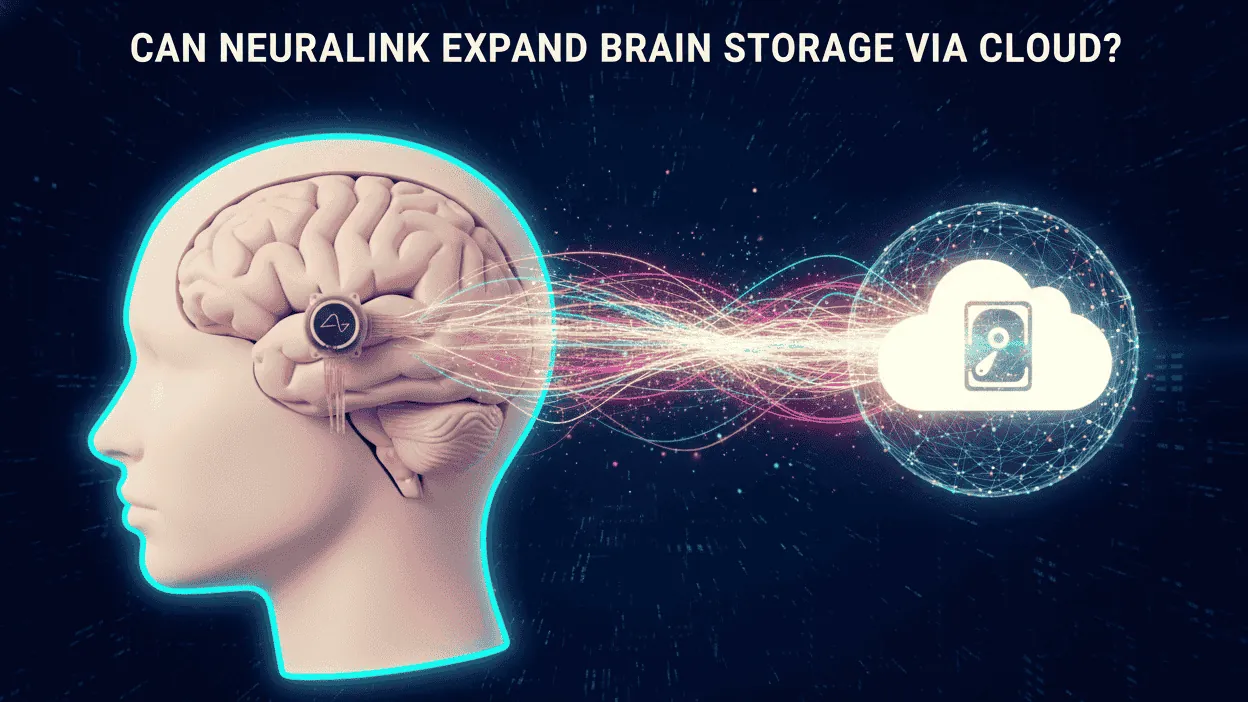
- Elon Musk has listed memory loss among the conditions Neuralink could one day address, but no Neuralink trial targets memory.
- Today's implant records from the motor cortex and cannot reach the hippocampus, the brain region most involved in forming memories.
- Storing memories in the cloud would require advances in recording, decoding, and stimulation that no company has shown.
Where Neuralink starts
Neuralink's N1 implant records from 1,024 electrodes in the motor cortex, and people with quadriplegia use it to control devices by thought. Participants now reach a median of about 10 bits per second on Neuralink's cursor test, according to Neuralink's October 2026 update, which shows the implant can decode intended movements quickly.
Elon Musk has listed memory loss among the problems Neuralink could address in the future, alongside paralysis and blindness. Participants have streamed over 50,000 hours of neural data, but that data comes from motor areas, not from the hippocampus, where episodic memories form.
How cloud storage for the brain might work
In theory, an implant could record activity during experiences, compress it, and send it over its wireless link for storage, and AI could later help search it. But reading a memory is a different problem from reading a movement. Nobody knows how to turn recorded activity back into a memory a person can experience, and doing so would also require stimulating the right neurons in the right pattern.
Neuralink has published datarepo, its internal platform for managing complex data, as described on Neuralink's blog. It is a tool for the company's own engineering data, not a personal memory store.
Neuralink's roadmap
Neuralink's roadmap called for about 3,000 channels in 2026, about 10,000 in 2027, and 25,000 in 2028. A 3,000-channel implant was disclosed in September 2026. The VOICE speech trial implanted its first participants in early 2026, and Blindsight, the planned vision implant, has not started human trials. Neuralink has not announced any memory research or trial.
Internal projections reported by Bloomberg targeted 20,000 implants a year by 2031, for medical uses. Neuralink has not announced a date for a non-medical device.
Challenges
Long-term signal quality is still being worked on: after changes made following the first participant's surgery, Neuralink reported higher signal quality in 18 of the next 20 participants and says it is still improving thread retention. Storing personal brain data in the cloud would also raise privacy and security questions that Neuralink has not addressed in public. The company's privacy policy says trial data is governed by each trial's protocol and consent forms.
This article was first published in October 2025 and corrected in October 2026; the latest patient count is on the patient table.








