
Will Neuralink Let Us Communicate with Dogs? Future Potential
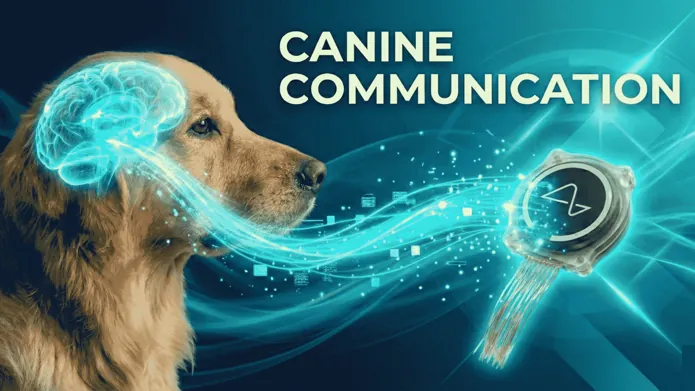
- Talking with dogs through Neuralink is speculation: no Neuralink device has been designed or tested for it.
- The idea rests on decoding a dog's brain signals and translating them into words, which would require research nobody has done.
- Neuralink's implants are being tested in people with paralysis, and its earlier animal work used pigs, sheep, and monkeys.
How human-dog communication might work
The idea starts from Neuralink's ability to decode neural activity. Dogs process emotions, commands, and social cues, and in principle an implant could record signals linked to states like hunger, play, or distress and show them as text or speech in an app. That could change pet ownership, veterinary care, and the work of service dogs, for example if a guide dog could signal what it notices to its handler.
Posts on X have suggested that Neuralink's human results could one day extend to animals. John Carmack, a notable figure in tech, has proposed linking Neuralink-implanted animals to vocal simulators, allowing dogs to "speak" through synthesized human language.
AI research on animal sounds could add to this. The Earth Species Project uses machine learning to study animal communication, such as whale calls. Combining that kind of work with brain recordings might one day improve translation, but nobody has shown it yet.
Challenges
Dog brains differ from human brains, and dogs do not have language areas like ours, so mapping their signals to words would need new decoding methods. Neuralink's implant and surgery were designed for primate brains and would need to be adapted for dogs.
Ethics are a large hurdle. Implanting a device in an animal for communication raises questions about consent and long-term health, and Neuralink has faced scrutiny over its past animal testing, as Reuters reported. Veterinary use would also need regulatory approval.
Battery life and wireless range in an active animal, and the privacy of any recorded data, are further problems. Public reaction on X is mixed: some people are excited about talking to pets, and others worry about exploiting animals.
Neuralink's technology and animal testing
Neuralink's implant uses threads thinner than a human hair, inserted by a surgical robot, to record neural activity. Earlier trials used pigs, sheep, and monkeys. In one demonstration, a monkey named Pager played the video game Pong using only his mind. Neuralink has not publicly described any tests in dogs.
In people, Neuralink reported 21 participants on January 28, 2026, and zero serious device-related adverse events, according to its two-year update. Its trials focus on paralysis, speech loss, and, in the future, blindness.
Elon Musk's wider vision
Elon Musk co-founded Neuralink in 2016 to treat neurological disorders and, in the long run, connect human intelligence more closely with AI. He has talked about restoring vision and movement, which could one day have veterinary uses as well. Neuralink has not announced any plans for communicating with animals, and any such use would come long after the medical work in people.
This article was first published in October 2025 and corrected in October 2026; the latest patient count is on the patient table.








