
Neuralink Brain Input Delivery: How It Works Step-by-Step (Blindsight Product)
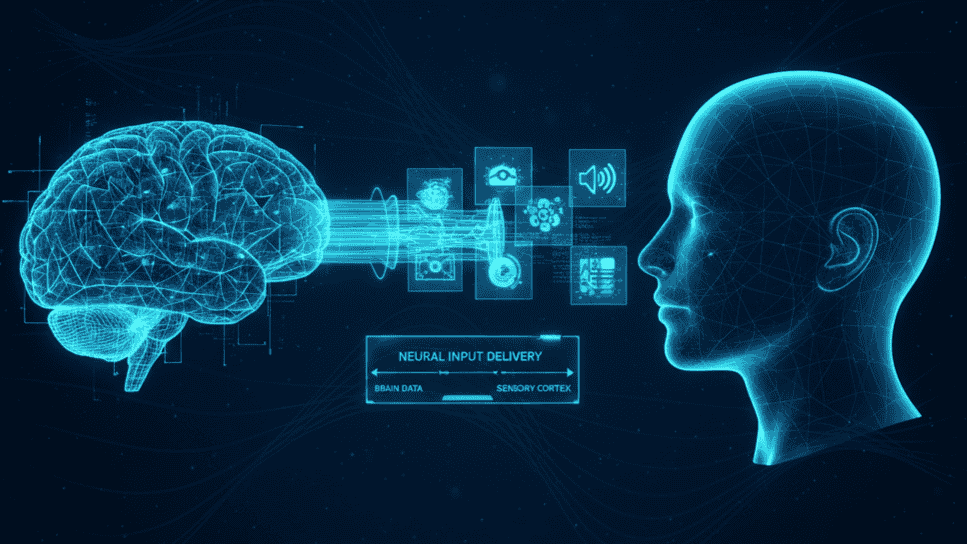
- Neuralink's Blindsight implant is designed to restore a basic form of vision by sending electrical pulses into the visual cortex. Human trials have not started yet.
- The planned system would capture images with a camera, turn them into stimulation patterns, send them wirelessly to the implant, and stimulate neurons so the brain perceives spots of light.
- Blindsight received an FDA Breakthrough Device Designation in September 2024, and Elon Musk said in 2024 that it was already working in monkeys.
How Blindsight would deliver input to the brain
Neuralink's implants in today's trials mostly record from the brain. Blindsight would work in the other direction, delivering input to the brain through electrical stimulation. The N1 implant, with 1,024 electrodes on flexible threads, has chips that can both record and stimulate. Blindsight would target the visual cortex, bypassing damaged eyes or optic nerves.
Elon Musk announced Blindsight in 2024, and it received an FDA Breakthrough Device Designation in September of that year, as Neuralink announced. Musk has said it could work even for people blind from birth, as long as their visual cortex is intact. Neuralink has not yet started a human Blindsight trial; its visual prosthesis page invites people to join its registry to be told when US trials launch.
Neuralink has not published Blindsight's stimulation settings, frame rate, power use, or resolution, so the steps below describe the design in general terms.
Step 1: capturing the scene
A camera, likely mounted on glasses, would capture the scene in real time. Software on a paired phone or computer would simplify the image to match what the implant can show. Musk has compared the first results to early Atari graphics.
Step 2: turning images into stimulation patterns
Software would convert the simplified image into commands for individual electrodes. The visual cortex is laid out like a map of the visual field, so neighboring electrodes would correspond to neighboring points in the scene. Stimulating a small group of neurons produces a phosphene, a spot of light that the person perceives without any light reaching the eye. Many phosphenes together could form a rough image.
Step 3: sending the data to the implant
The patterns would travel wirelessly from the external device to the implant, the same way Neuralink's current implants exchange data with a paired computer over Bluetooth. The implant has no wires through the skin, which reduces the risk of infection.
Step 4: stimulating the visual cortex
The implant's chips would deliver small, balanced electrical pulses through each electrode. Recording channels could check how neurons respond and help adjust the stimulation over time. The robot would place the threads during surgery, as it does in Neuralink's current trials.
Step 5: perception and adaptation
The brain would have to learn to read the phosphene patterns as useful images, and researchers expect that skill to improve with practice. Musk has said later versions could exceed normal human vision, adding infrared or ultraviolet perception. None of this has been tested in people yet.
What is known about safety
Neuralink reported zero serious device-related adverse events across its Telepathy participants as of January 2026. Internal projections reported by Bloomberg targeted Blindsight approval by 2030 and 20,000 implants a year by 2031.
This article was first published in October 2025 and corrected in October 2026; the latest patient count is on the patient table.








