
What Happens If Neuralink's Link Fails? Troubleshooting Guide
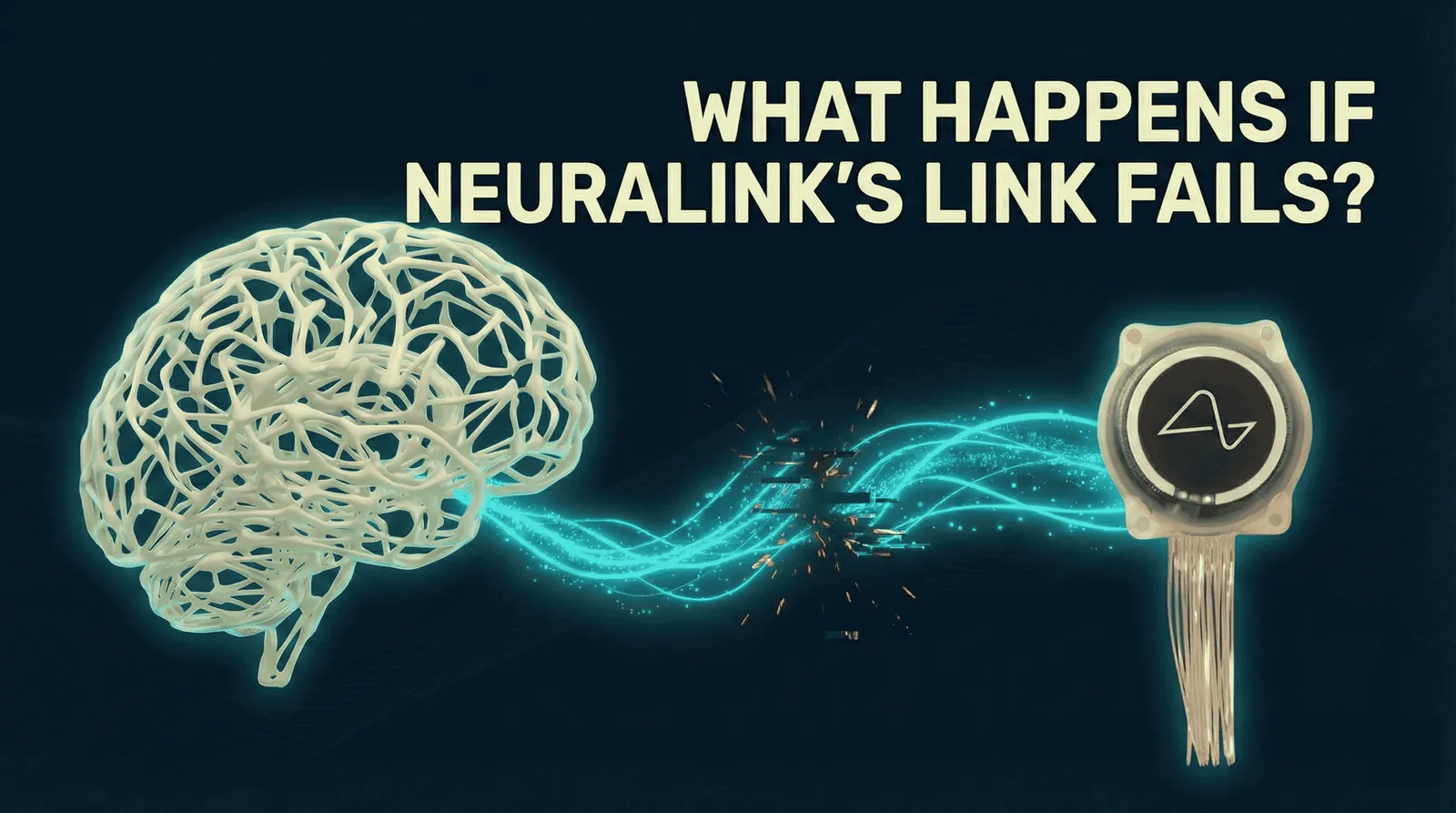
- The best-known Neuralink failure is thread retraction, which slowed the first participant's cursor control in 2024 until software changes restored and then improved it.
- Neuralink has not published its participant support process; participants describe regular remote sessions with Neuralink engineers and follow-up visits at their trial site.
- Neuralink reported zero serious device-related adverse events as of January 2026.
Thread retraction, the main known failure
Neuralink's N1 implant connects to the brain through 1,024 electrodes on flexible threads in the motor cortex. The most reported problem is thread retraction, where threads pull back out of the brain tissue. It happened to the first PRIME participant, Noland Arbaugh, in spring 2024, and many of his threads retracted, which reduced cursor speed.
Arbaugh noticed the change during everyday tasks like browsing and gaming. The implant stayed in place under the scalp, he kept some function, and the battery and wireless link kept working. The battery lasts up to nine hours per charge and recharges wirelessly. Connection problems with the app are similar to ordinary Bluetooth glitches on a phone.
How problems are handled
Neuralink has not published its participant support process. Participants describe regular remote sessions with Neuralink engineers and follow-up visits at their trial site, such as Barrow Neurological Institute.
In Arbaugh's case, Neuralink changed his decoding software, and his bits per second rose above his earlier level within days. After changes made following Noland's surgery, Neuralink reported higher signal quality in 18 of the next 20 participants and says it is still improving thread retention, according to its January 2026 update.
Recovery and performance
When some channels stop providing useful signal, decoders can rely on the remaining ones, and the 1,024-electrode design gives them room to do that. UK participant Paul controlled a cursor hours after his surgery. Neuralink's 2026 decoders were pretrained on over 50,000 hours of neural data, which helps them adjust to changes in each person's signals, according to Neuralink's October 2026 update.
Neuralink reported zero serious device-related adverse events as of January 2026. A UAE site is recruiting, and no implant there has been reported as of October 2026.
Improving reliability
Neuralink changed its surgery and thread design after Noland's retraction. The CONVOY study, which tests robotic arms, adds another way for participants to use the system. The VOICE speech trial implanted its first participants in early 2026.
Internal projections reported by Bloomberg target 20,000 implants a year by 2031. Jon Noble, a UK participant, wrote in December 2025 that more than 10,000 people were on the US waiting list.
This article was first published in October 2025 and corrected in October 2026; the latest patient count is on the patient table.








