
Neuralink Medical Conditions: Treatments and Applications Explored
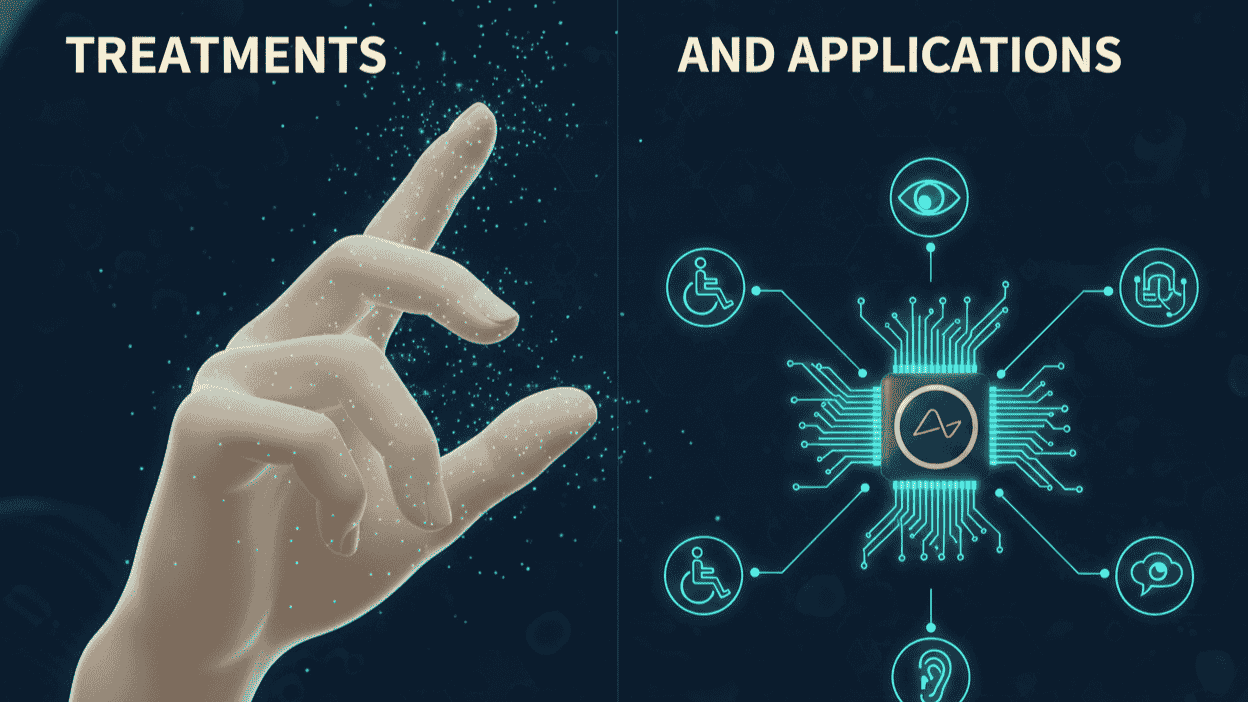
- Neuralink's PRIME-family trials let people with quadriplegia from spinal cord injury or ALS control computers and robotic arms by thought.
- The VOICE trial is testing whether the implant can restore speech for people with ALS, stroke, or other causes of severe speech loss.
- Blindsight, a planned implant for blindness, has an FDA Breakthrough Device Designation but has not started human trials.
Neuralink's brain-computer interface targets conditions where existing therapies fall short, starting with paralysis and expanding to speech and vision. Neuralink reported 21 participants on January 28, 2026, and Neura Pod's patient table lists 27+ publicly known patients as of October 2026.
Quadriplegia and ALS
The PRIME study tests the N1 implant in people with quadriplegia from cervical spinal cord injury or ALS who have had limited or no hand use for at least a year, according to its ClinicalTrials.gov record. The implant's 1,024 electrodes, inserted by a robot into the motor cortex, pick up intended movements and turn them into commands for a cursor, keyboard, or robotic arm.
US implants take place at Barrow Neurological Institute in Phoenix and the University of Miami. ALS patient Nick Wray uses the device to move a robotic arm and feed himself, describing the experience as "surreal and rewarding." Participants have since set a brain-computer interface record of 11.32 bits per second, according to Neuralink's October 2026 update.
Canada completed its first two procedures at University Health Network in late August and early September 2025, and the UK's first participant, Paul, who has motor neurone disease, received his implant at University College London Hospitals in October 2025. Paul controlled a computer hours after surgery and soon moved on to video games like Dawn of War. UAE-PRIME began recruiting at Cleveland Clinic Abu Dhabi, and no implant there has been reported as of October 2026.
Restoring speech
Neuralink addresses severe speech impairment, which affects millions of people with ALS, stroke, or injury. The VOICE study, backed by an FDA Breakthrough Device Designation for speech, is testing whether the implant can turn attempted speech into text or a synthesized voice. It enrolls people with ALS, PLS, stroke, or spinal cord injury, according to its trial record. Its third participant spoke with a voice decoded from his brain in September 2026.
Neuralink submitted results from its first three participants to the New England Journal of Medicine; the paper had not been published as of October 2026.
Blindsight and vision
Blindsight is meant to stimulate the visual cortex directly, bypassing the eyes, so it could help people whose blindness comes from eye or optic nerve damage. It received an FDA Breakthrough Device Designation in September 2024. Neuralink said human trials would start in 2026, and none had launched as of October 2026. Elon Musk has said early users would see in low resolution, enough to get around.
Patient stories
Noland Arbaugh, the first implant recipient, marked one year with the device in January 2025 by gaming and studying. Audrey Crews, the first woman implanted, uses the implant to make art. Alex Conley, the second US patient, plays video games and was the first to control a robotic arm. Over-the-air software updates refine performance, and the $650 million Series E in June 2025 funds the expansion toward the company's projected 20,000 implants a year by 2031, according to internal projections reported by Bloomberg.
Other conditions Musk has mentioned
Elon Musk has said Neuralink could one day help with other conditions, including multiple sclerosis and cerebral palsy, and possibly depression or dementia through stimulation. None of these is part of a Neuralink trial today.
This article was first published in October 2025 and corrected in October 2026; the latest patient count is on the patient table.








