
Will Neuralink Create a Techno-Human Elite? Future Implications
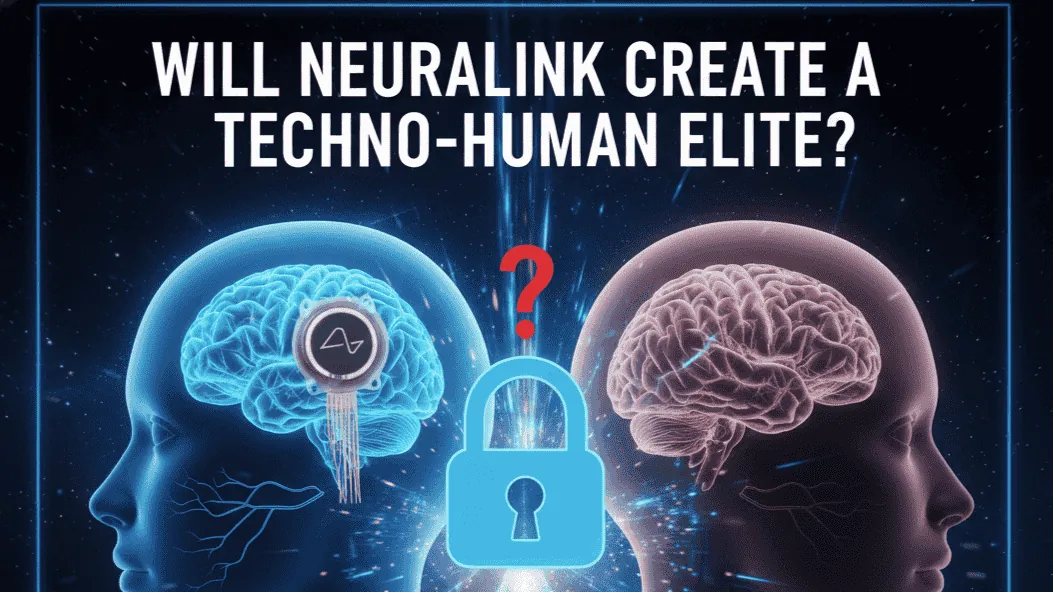
- Neuralink is a medical device today, used in clinical trials by people with paralysis, and Elon Musk has said he wants enhancements to reach able-bodied people later.
- Musk has said he wants the implant to be mass-produced and affordable, but Neuralink has not published a price or a plan for healthy users.
- Critics worry that enhancement could split society into people who can afford it and people who cannot.
From restoration to enhancement
Neuralink's implant starts with helping people with paralysis regain control of computers and devices. As of late October 2025, 13 participants were using the device, and Neuralink reported 21 on January 28, 2026. The first recipient, Noland Arbaugh, studies neuroscience and gives talks, using the implant for his computer work. In November 2025, Elon Musk shared a report that Noland hopes to receive a second implant below his spinal injury to help restore leg movement.
Musk co-founded Neuralink in 2016 with the long-term goal of linking people closely with AI. Early demonstrations with monkeys playing Pong led to human participants who now match able-bodied mouse users. The PRIME and CONVOY studies are testing safety and function.
Neuralink's roadmap targets about 10,000 channels per implant in 2027. Musk has described future abilities such as Blindsight vision and communication from mind to mind, which would move the device from restoration to augmentation. None of these has been tested in healthy people.
Elon Musk's case for broad access
Musk argues that AI will soon exceed human intelligence and that people without a faster interface risk being left behind. He has said he wants enhancements to be available to everyone, with manufacturing scaled up the way Tesla scaled cars to bring costs down.
Trials run in the US, Canada, and the UK, with a UAE site recruiting. Jon Noble, a UK participant, wrote in December 2025 that more than 10,000 people were on the US waiting list. Any trials in able-bodied people would come after medical approval, which internal projections reported by Bloomberg placed around 2029 for the Telepathy device.
The implant's threads are inserted by the R1 robot. UK patient Paul controlled a computer hours after surgery, which shows how quickly some users adapt.
Inequality and access
Critics worry that Neuralink could favor the wealthy and create a gap between enhanced and unenhanced people, similar to today's gaps in internet access. Supporters point to Tesla's push to make electric vehicles cheaper and Starlink's coverage of remote areas as signs that Musk's companies aim for scale. Neuralink has not said how it would price an implant or whether insurance would cover medical uses.
Regulators focus on safety for now, and laws on mental privacy are starting to appear in several US states.
Implications for society
If enhancement worked and became widespread, Musk argues, it could speed up science and engineering, and paired with Tesla's Optimus robots it could extend what people can do physically. He also ties it to SpaceX's goal of life on Mars. Whether it produces an elite or a broad uplift would depend on price, regulation, and how fast the technology spreads, none of which is known yet.
This article was first published in October 2025 and corrected in October 2026; the latest patient count is on the patient table.








