
Neuralink Learning Curve: What to Expect for New Users
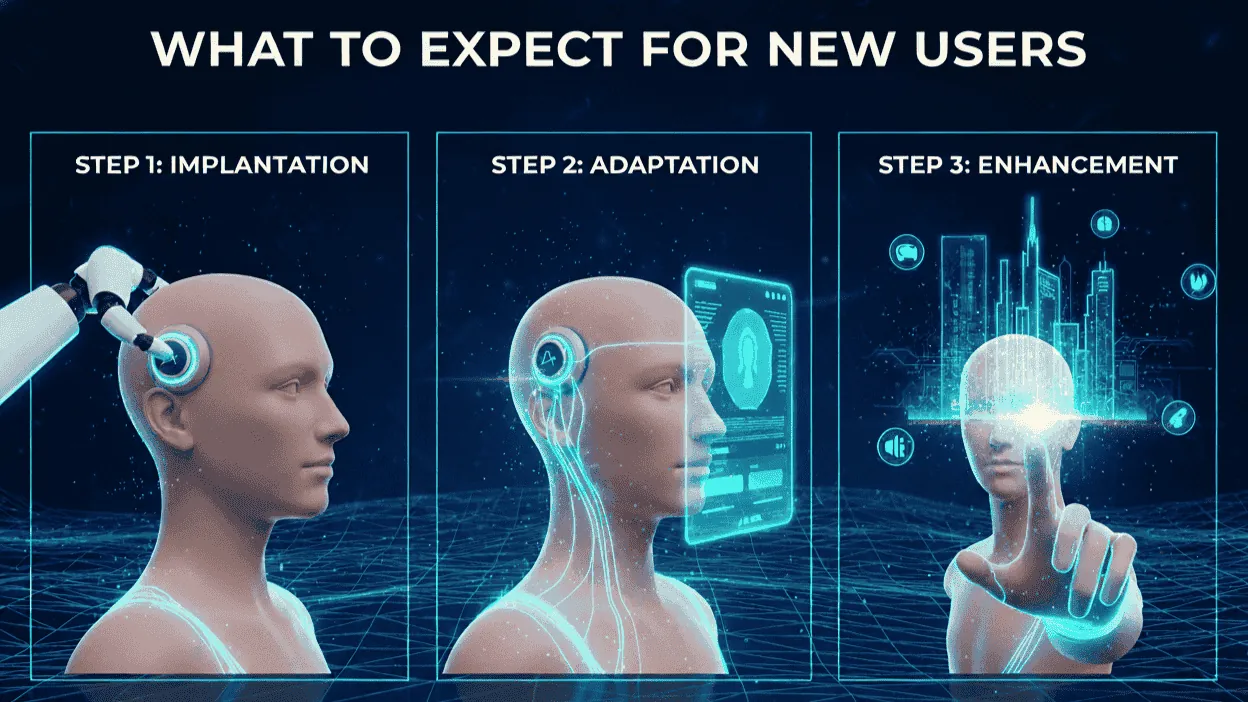
- New Neuralink users usually get basic cursor control within minutes to hours of first connecting, as the second PRIME participant and UK patient Paul did.
- Skills build over the following weeks through regular sessions, and Neuralink's newer decoders need less calibration.
- Over the following months, participants build toward multitasking and, for some, typing at up to 40 words per minute.
The first sessions
Patients wake from surgery with the N1 implant recording from 1,024 electrodes in the motor cortex. The second PRIME participant, Alex Conley, controlled a computer cursor within about 5 minutes of connecting to his device at Barrow Neurological Institute. Paul, the first UK patient, moved a cursor hours after his October 2025 procedure.
Fast starts come from decoders that map intended movements to on-screen actions in the N1 app. Early sessions focus on simple tasks like hitting targets, which train the decoder in real time. Neuralink engineers support new users remotely, and software updates arrive over the air.
The first weeks
Participants commit to at least two 1-hour research sessions a week, according to the PRIME brochure, and many use the implant on their own far more. The app's games, such as Webgrid, train accuracy by having users hit targets.
First patient Noland Arbaugh moved from basic clicking to short messages within days. ALS patient Brad Smith described an early "drunk mouse" feeling before control settled. Typing builds through imagined hand movements, and some users with ALS click with a small muscle movement instead.
Calibration has also become lighter. Neuralink says users averaged 55 minutes a week of calibration, and its 2026 decoder update cut that to as little as 10 minutes a week for some users, according to Neuralink's October 2026 update.
The following months
Within weeks, Arbaugh was playing games and browsing on his own. In the CONVOY study, Alex Conley learned to control robotic arms for reaching and grasping. Software adapts to fatigue and signal drift, and caregivers help with setup.
Over time, participants reach a median of about 10 bits per second on Neuralink's cursor test, and the best have typed at up to 40 words per minute using imagined finger movements, according to Neuralink's January 2026 update. Participants have streamed over 50,000 hours of neural data in total.
Long-term use
Arbaugh was using his implant about 10 hours a day by August 2025, for work, study, and keynote talks. He designs 3D models and narrates videos with an AI voice, and participants multitask, such as emailing while gaming. After his thread retraction, software changes restored and then improved his performance. Neuralink reported zero serious device-related adverse events as of January 2026.
In November 2025, Elon Musk shared a report that Noland hopes to receive a second implant below his spinal injury to help restore leg movement.
What shapes each person's progress
Condition, stability, and familiarity with technology all affect how fast someone learns. People with ALS may start with alternative ways to click. A reliable caregiver helps participants keep up with sessions. Living near a trial site like the University of Miami or Barrow Neurological Institute makes in-person adjustments easier.
This article was first published in October 2025 and corrected in October 2026; the latest patient count is on the patient table.








